
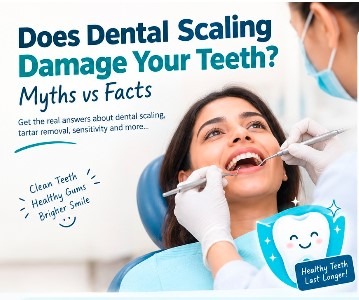
Does Dental Scaling Damage Your Teeth? Myths vs Facts
Have you ever avoided visiting a dentist because someone told you that dental scaling makes your teeth weak, loose, or sensitive? You are not alone. Many people hesitate to get their teeth professionally cleaned because they have heard similar stories from friends, family members, or social media. The truth is that dental scaling is a common dental procedure used to remove plaque and tartar buildup from the teeth and around the gumline. When performed appropriately by a dental professional, it helps maintain oral hygiene and protect gum health.However, some people notice temporary tooth sensitivity, small spaces between their teeth, or changes in how their teeth feel after cleaning. These experiences can be confusing, especially if it is their first dental scaling appointment.
So, does dental scaling really damage your teeth, or are these concerns based on common myths?
What Exactly Is Dental Scaling?
Before discussing the myths, let’s understand what dental scaling actually involves.
Throughout the day, a sticky film called plaque forms on your teeth. It contains bacteria that feed on sugars and other carbohydrates left behind after eating. Brushing and flossing help remove this film, but plaque that remains on the teeth can gradually harden into tartar, also known as dental calculus.
Once tartar forms, it cannot be removed completely with an ordinary toothbrush. A dentist needs to use professional dental instruments to remove these hardened deposits safely.
Dental scaling is the process of removing plaque and tartar from the tooth surfaces and, when necessary, from below the gumline.
There are two common approaches:
- Routine scaling: Removes plaque and tartar accumulated around the teeth and gumline.
- Deep cleaning: Also called scaling and root planing, this treatment targets deposits below the gumline in patients with certain forms of gum disease.
Your dentist will recommend the appropriate treatment after examining your teeth and gums.
It is also important to understand that scaling is not the same as teeth whitening. Whitening aims to change the appearance of tooth colour, whereas scaling removes deposits that can contribute to stains and gum problems.
Does Dental Scaling Damage Your Teeth? The Real Answer
Let’s address the biggest concern first.
No, properly performed professional dental scaling is not intended to damage healthy teeth or remove healthy enamel. Its main purpose is to remove plaque and hardened tartar that cannot be eliminated through regular brushing alone.
Your tooth enamel is the hard outer layer that protects the visible part of each tooth. Professional scaling uses instruments designed to remove deposits from the tooth surface while preserving the healthy structure underneath.
So why do some people feel that their teeth have become weaker after scaling?
The answer often lies in what was already happening in their mouths before the procedure.
For example, tartar may have accumulated around the gumline for months or even years. When the dentist removes it, previously hidden spaces may become visible. If gum disease has caused gum recession or loss of supporting bone, the teeth may also feel different after cleaning.
In other words, scaling can reveal an existing dental problem rather than create it.
Some patients also experience temporary sensitivity after treatment, especially if their gums have receded and the roots of their teeth are exposed.
This does not automatically mean that their enamel has been damaged.
According to the American Dental Association, professional scaling and root planing removes plaque and tartar and is an important treatment for appropriate cases of gum disease.
The key is to have the procedure performed by a qualified dental professional who can assess your individual oral health needs.
Dental Scaling Myths vs Facts: 6 Common Misconceptions
Let’s look at the six myths that often prevent people from getting professional dental cleaning.
Myth 1: Dental Scaling Makes Your Teeth Weak
Fact: Proper dental scaling does not normally weaken healthy teeth.
This is probably the most common misconception about teeth cleaning.
Some people believe that the dentist scrapes away the protective layer of their teeth during scaling. In reality, the procedure is designed to remove plaque and tartar, not healthy enamel.
Imagine a layer of hardened dirt accumulating on a surface over time. Removing that dirt reveals the original surface underneath. It does not automatically mean the surface has become weaker.
Similarly, removing tartar allows your dentist to assess the actual condition of your teeth and gums.
However, technique matters. Excessive or inappropriate instrumentation can harm tooth surfaces, which is why scaling should be performed by a trained professional.
The takeaway: Do not avoid necessary dental cleaning because of the fear that it will automatically weaken your teeth.
Myth 2: Dental Scaling Creates Gaps Between Teeth
Fact: Scaling can reveal spaces that were already present but hidden by tartar or swollen gums.
Have you ever noticed someone saying, “My teeth had no gaps before scaling, but now I can see spaces between them”?
This experience can be surprising, but there is a simple explanation.
When tartar builds up between teeth, it can occupy spaces that would otherwise be visible. Removing these deposits may make the spaces appear larger.
Gum disease can also cause the gums to recede or the supporting tissues to deteriorate. Once the deposits are removed, these existing changes may become more noticeable.
Healthy gums naturally fill much of the space between neighbouring teeth. If gum tissue has been lost, professional cleaning cannot instantly restore it.
It is important to distinguish between spaces revealed by cleaning and actual damage caused by a dental procedure.
If you notice significant changes in your gums or the spacing of your teeth, ask your dentist to examine the area and explain what is happening.
Myth 3: Teeth Become Loose After Scaling
Fact: Tooth looseness is often associated with existing gum disease or loss of supporting bone.
Your teeth are supported by the gums, periodontal ligament, and surrounding bone. Healthy supporting tissues help keep them stable.
When gum disease progresses, these supporting structures can become damaged. In advanced cases, teeth may become loose even before the patient realises that a serious problem exists.
Tartar can accumulate around these teeth and sometimes create a misleading sense of support. When the deposits are removed, the existing mobility may become more noticeable.
This is why some patients mistakenly blame scaling for loose teeth.
Professional cleaning does not rebuild lost bone or automatically correct advanced gum disease, but appropriate periodontal treatment can help control infection and prevent further damage.
If your teeth already feel loose, do not ignore the problem or assume that scaling is responsible. Arrange a dental examination so the underlying cause can be identified.
Myth 4: Dental Scaling Causes Permanent Tooth Sensitivity
Fact: Temporary sensitivity can occur after scaling, but it does not necessarily mean permanent damage.
Imagine drinking cold water after a dental cleaning and suddenly feeling a sharp sensation in your teeth. It can be uncomfortable, especially if you were not expecting it.
This sensitivity may occur because the removal of tartar exposes tooth surfaces or roots that were previously covered by deposits. Gum recession, existing enamel wear, and gum disease can also contribute to sensitivity.
For many people, the discomfort gradually improves as the teeth and gums settle after treatment. However, the duration varies depending on the person’s dental condition and the type of cleaning performed.
To manage mild sensitivity, you can:
- Use a soft-bristled toothbrush.
- Brush gently rather than scrubbing aggressively.
- Ask your dentist whether a desensitising toothpaste would help.
- Follow the aftercare advice provided for your specific treatment.
If sensitivity is severe, persists, or becomes worse, consult your dentist. Tooth decay, cracks, and other dental conditions can also cause sensitivity and may need separate treatment.
Myth 5: You Only Need Dental Scaling When Your Teeth Look Yellow
Fact: Tartar can build up even when your teeth appear relatively clean.
Many people judge their oral health by looking in the mirror. If their teeth look white and their breath smells fresh, they assume everything is fine.
Unfortunately, appearances can be misleading.
Plaque can accumulate along the gumline and between teeth without being obvious. Over time, it may harden into tartar. Deposits can also develop in areas that are difficult to reach with a toothbrush.
Yellow or brown tartar is not the only sign that you may need professional cleaning. Bleeding gums, persistent bad breath, gum swelling, and visible deposits can also indicate a problem.
On the other hand, naturally yellowish teeth do not automatically mean that you need scaling. Tooth colour varies naturally, and discolouration may have several causes.
A dental examination is the best way to determine whether professional cleaning is needed.
Myth 6: Dental Scaling Must Be Done Every Month
Fact: The right cleaning schedule depends on your individual oral health.
There is no single dental scaling schedule that is appropriate for every person.
Someone with healthy gums, good brushing habits, and little tartar buildup may need professional cleaning less frequently than someone with recurring tartar deposits or a history of gum disease.
People receiving periodontal treatment may also need more frequent maintenance visits, depending on their condition.
Your dentist can recommend an appropriate interval based on your gum health, plaque and tartar buildup, medical and dental history, and response to previous treatment.
Avoid scheduling unnecessary procedures simply because someone else follows a particular routine. At the same time, do not postpone recommended cleaning because your teeth look healthy.
The goal is to maintain your oral health with a plan suited to your needs.
What Happens During and After Dental Scaling?
If you have never had dental scaling before, knowing what to expect can make the experience less stressful.
During the procedure
Your dentist will examine your teeth and gums to assess plaque buildup, tartar deposits, and signs of gum inflammation.
Professional instruments, including ultrasonic scalers or hand instruments, may be used to remove deposits from the tooth surfaces. If deeper cleaning is needed, the dentist may recommend treatment below the gumline.
You may hear a buzzing sound or feel vibrations and water during ultrasonic scaling. The experience varies from person to person.
Routine scaling is generally well tolerated, although people with sensitive teeth or inflamed gums may experience discomfort. Deep cleaning may require local anaesthesia, depending on the condition being treated.
After the procedure
Your teeth may feel smoother and cleaner. You might also experience mild gum tenderness, slight bleeding, or temporary sensitivity.
These effects can be more noticeable after deep cleaning, especially when gum disease is present.
Follow your dentist’s aftercare instructions, maintain gentle oral hygiene, and ask for advice if you are unsure what to do.
If you experience severe pain, persistent bleeding, worsening swelling, or symptoms that do not improve, contact your dentist for an assessment.
Why Avoiding Dental Scaling Can Be More Harmful
Fear of scaling sometimes leads people to postpone dental appointments for years. Unfortunately, ignoring hardened tartar can create problems of its own.
Tartar provides a surface where additional plaque can accumulate. Bacteria in plaque can irritate the gums, causing inflammation, redness, and bleeding.
When gum disease progresses without appropriate treatment, it can damage the tissues and bone that support your teeth. Advanced periodontal disease may eventually lead to tooth loss.
Regular brushing and flossing are essential, but they cannot reliably remove tartar that has already hardened.
Professional cleaning helps remove these deposits and allows your dentist to assess your gum health.
It is worth remembering that scaling alone does not replace daily oral care, nor does it cure every stage of gum disease. Some patients need additional periodontal treatment.
The best approach is to combine professional dental care with consistent home hygiene.
Dental Scaling and Orthodontic Treatment: What Should Braces and Aligner Patients Know?
Maintaining clean teeth is particularly important if you are undergoing orthodontic treatment.
Braces create additional areas where food particles and plaque can collect. Cleaning around brackets and wires requires extra attention, as plaque left behind may contribute to gum inflammation, tooth decay, and white marks on the enamel.
If you are considering braces, an orthodontic consultation can help assess your teeth, bite, and oral health before treatment begins.
Patients looking for an Orthodontic Consultant in Pune should understand that healthy gums and good oral hygiene are important parts of successful orthodontic care.
Similarly, someone searching for a Braces Specialist in Kothrud should ask about maintaining oral hygiene during treatment, including brushing techniques, cleaning between teeth, and the need for professional dental cleaning.
Clear aligners also require proper care. Although removable aligners make brushing easier than fixed braces in many situations, wearing them over inadequately cleaned teeth can trap plaque and food residue against the tooth surfaces.
If you are exploring treatment with a Clear Aligner Specialist in Deccan, discuss your current oral health and any gum concerns before starting treatment.
Remember, scaling does not straighten teeth, and orthodontic treatment does not replace professional cleaning. They serve different purposes and may complement one another when recommended as part of an individual treatment plan.
How Often Should You Get Dental Scaling?
The frequency of professional cleaning depends on how quickly tartar builds up and whether you have gum disease or other risk factors.
During a dental check-up, your dentist can assess your gums, identify deposits, and recommend a suitable cleaning schedule.
Some people may benefit from routine preventive cleaning, while others with periodontal problems may require more frequent maintenance.
Do not assume that everyone needs scaling at exactly the same interval. Equally, avoid waiting until you experience pain or visible tartar before seeking advice.
A personalised preventive care plan is the most sensible approach.
When Should You Consult a Dentist?
Occasional mild sensitivity after scaling may be temporary, but certain symptoms deserve professional attention.
Arrange a dental appointment if you notice:
- Gums that bleed repeatedly while brushing or eating.
- Persistent gum swelling, redness, or tenderness.
- Bad breath that continues despite good oral hygiene.
- Teeth that feel loose or a noticeable change in your bite.
- Severe or persistent sensitivity after dental cleaning.
- Pain that worsens instead of gradually improving.
These symptoms can have different causes, and only an appropriate examination can establish what is happening.
Seeking advice early may help identify problems before they become more difficult to manage.
Simple Tips to Maintain Healthy Teeth After Scaling
Professional cleaning is only one part of maintaining a healthy smile. Your daily habits matter just as much.
1. Brush twice daily. Use a soft-bristled toothbrush and fluoride toothpaste. Clean all tooth surfaces gently, paying attention to the gumline.
- Clean between your teeth. Use dental floss or another interdental cleaning aid recommended by your dentist to remove plaque from areas your toothbrush cannot reach.
- Limit frequent sugary snacks. Reduce how often you consume sugary foods and drinks to help lower your risk of tooth decay.
- Avoid aggressive brushing. Applying excessive pressure will not make your teeth cleaner. It may contribute to gum irritation and tooth wear over time.
- Never scrape tartar off yourself. Using sharp objects or metal tools at home can injure your gums and damage tooth surfaces.
- Follow your dentist’s advice. Attend recommended check-ups and discuss any recurring sensitivity, bleeding, or tartar buildup.
Small, consistent habits can make a meaningful difference to your long-term oral health.
Conclusion
So, does dental scaling damage your teeth? When performed appropriately, professional scaling is designed to remove harmful deposits and support healthy teeth and gums, not weaken them.
Concerns about sensitivity, gaps, or loose teeth often arise because tartar removal reveals existing dental conditions. That is why a proper examination and individualised treatment plan matter.
Avoiding professional cleaning because of myths may allow plaque and tartar to accumulate and contribute to gum problems. Instead, focus on regular brushing, daily interdental cleaning, and dental check-ups at intervals recommended for your needs.
If you have concerns about tartar buildup, bleeding gums, tooth sensitivity, or your oral health before orthodontic treatment, consider arranging a dental assessment with Dr. Bhushan Jawale at Smile N Shine Orthodontic Clinic in Pune.
A healthy smile starts with understanding your teeth, making informed decisions, and giving your oral health the care it deserves.
Frequently Asked Questions About Dental Scaling
1. Is dental scaling safe for teeth?
Professional dental scaling is generally considered safe when performed appropriately by a qualified dental professional. It removes plaque and tartar rather than intentionally removing healthy enamel. Your dentist will assess any existing dental problems before treatment.
2. Does scaling make teeth thinner?
Proper scaling is not intended to thin healthy teeth. If your teeth feel different after cleaning, it may be because tartar has been removed or previously hidden gum recession and tooth surfaces have become more noticeable.
3. How long does sensitivity last after scaling?
Sensitivity often improves over several days, although the duration varies. Deep cleaning, exposed roots, and existing gum problems can affect recovery. Seek dental advice if sensitivity is severe, persists, or worsens.
4. Can I eat normally after dental scaling?
Many people can eat normally after routine scaling. However, if your teeth or gums are sensitive, softer foods and avoiding very hot or cold items may be more comfortable temporarily. Follow any specific instructions provided by your dentist.
5. Can brushing remove tartar without scaling?
Brushing and flossing help prevent plaque from hardening, but they cannot reliably remove established tartar. A dental professional can determine whether scaling is needed.
6. Does dental scaling whiten teeth?
Scaling can remove certain external stains caused by plaque and tartar, making teeth look cleaner. However, it is not a tooth-whitening procedure and does not change the natural colour of your enamel.